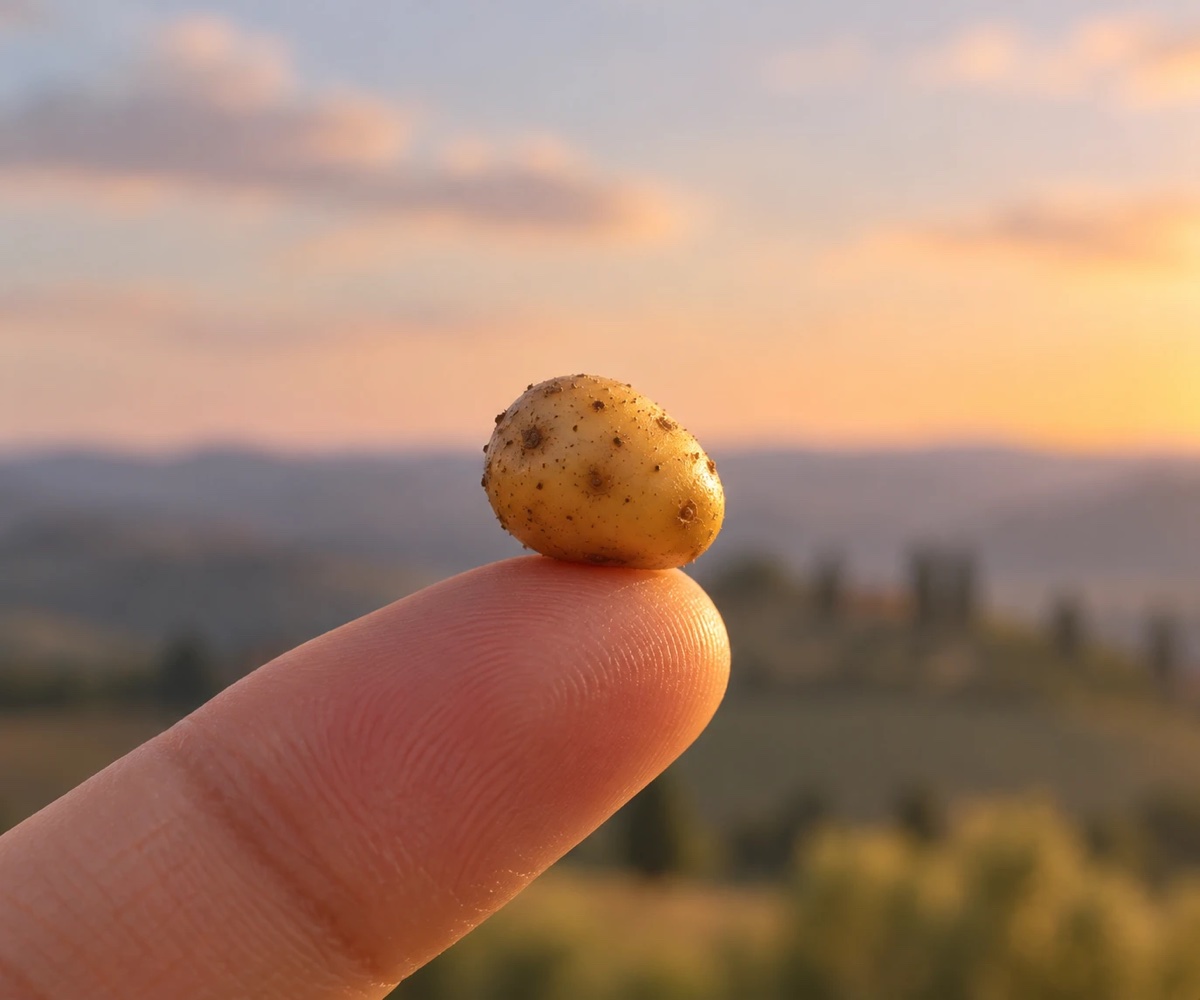
Harvest 2026: new nodes are on their way
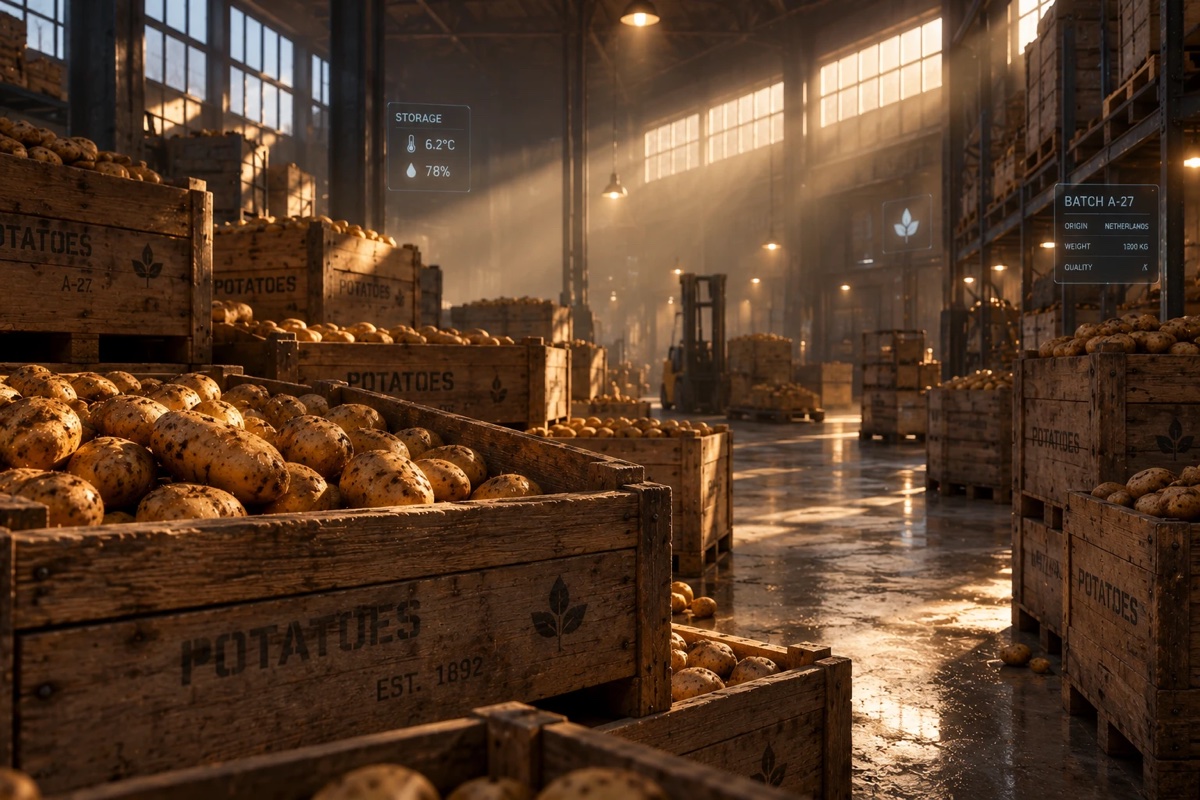
The 2026 harvest is in. Thousands of new potato battery nodes have been sorted into crates and are on their way to users across the EU.
How a potato battery works
The potato battery is a classic school science experiment. You push two electrodes made of different metals into a potato, usually copper and zinc. The potato’s juice acts as the electrolyte, and a voltage of around 0.5–0.9 V appears between the electrodes. Wire a few in series and you can light an LED — and, as it turns out, think very, very slowly.
Each Potato AI node is one of these cells. Several nodes are connected in series, the energy builds up in a supercapacitor, and a microcontroller outputs a token once there’s enough charge.
Green AI with a negative carbon footprint
Training and running large neural networks takes an enormous amount of electricity. Potato AI works the other way round: while the potato was growing it absorbed CO₂, and once it’s decommissioned you can boil it.
- No industrial cooling — a cool cellar does the job.
- No rare metals, apart from copper and zinc.
- Recycled as food, not as e-waste.
What changes for users
Blue-Eye Pro subscribers get fresh nodes first. A node lasts 5–14 days, so deliveries follow a seasonal schedule, and old nodes can go straight to the kitchen.
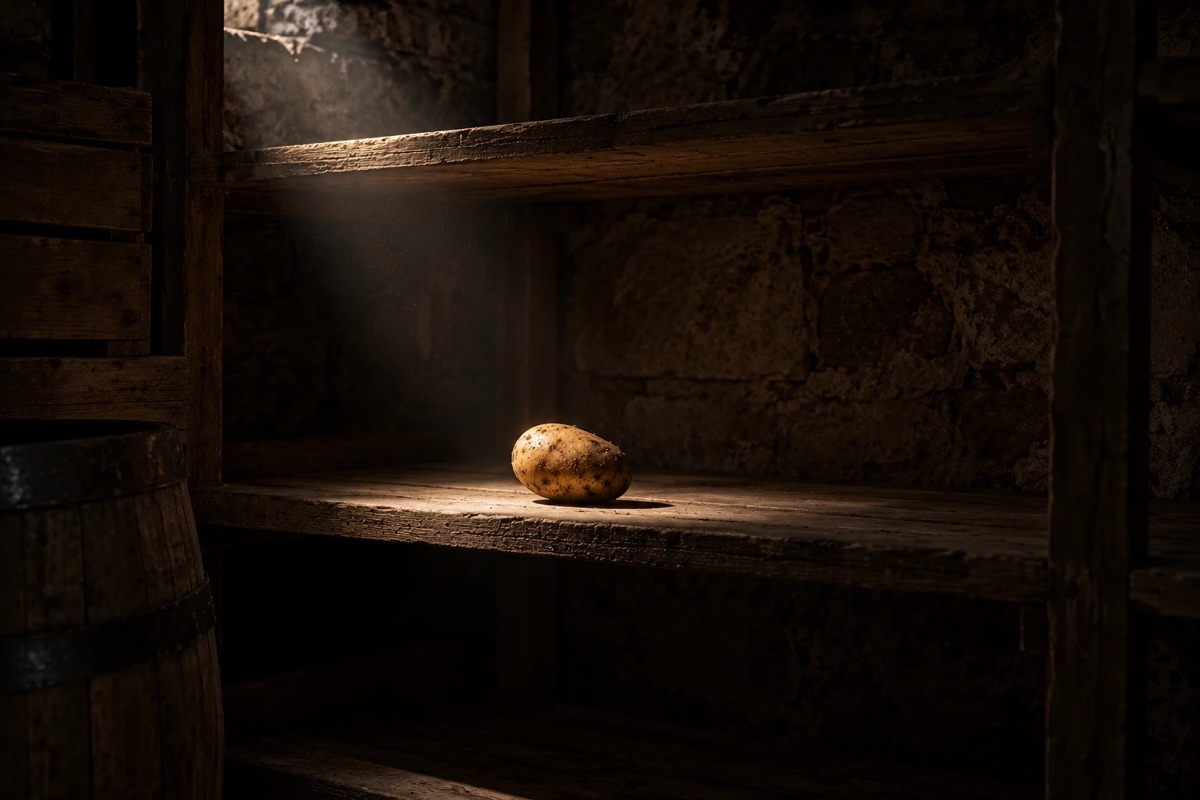
Store nodes at 4–6 °C. It’s the only temperature setting we recommend adjusting.
If your node turns green
Green patches on a tuber are a sign of solanine. We decommission nodes like that, and they don’t go to the kitchen. Contact support and we’ll send you a replacement.